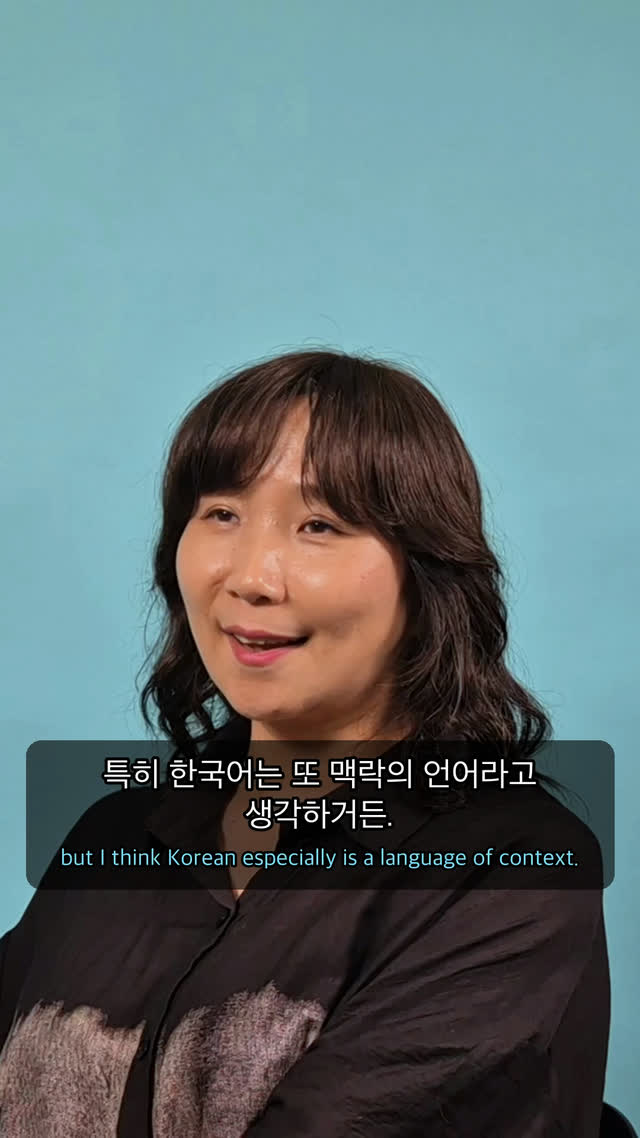
Context
Korean has context
한국어에는 맥락이 있다
Ask her to brag about Korean and this is what she picks: the same words mean different things depending on who is in the room.
한국어를 자랑해 보라고 하면 이걸 고릅니다. 같은 말도 누가 함께 있느냐에 따라 뜻이 달라집니다.
Short clips with Korean and English subtitles. Nothing to sign up for. Each one is a single idea about how Korean actually works between people.
한국어·영어 자막이 함께 나오는 짧은 영상입니다. 가입할 것은 없습니다. 한 편에 하나씩, 사람 사이에서 한국어가 실제로 어떻게 작동하는지를 다룹니다.
Ask her to brag about Korean and this is what she picks: the same words mean different things depending on who is in the room.
한국어를 자랑해 보라고 하면 이걸 고릅니다. 같은 말도 누가 함께 있느냐에 따라 뜻이 달라집니다.
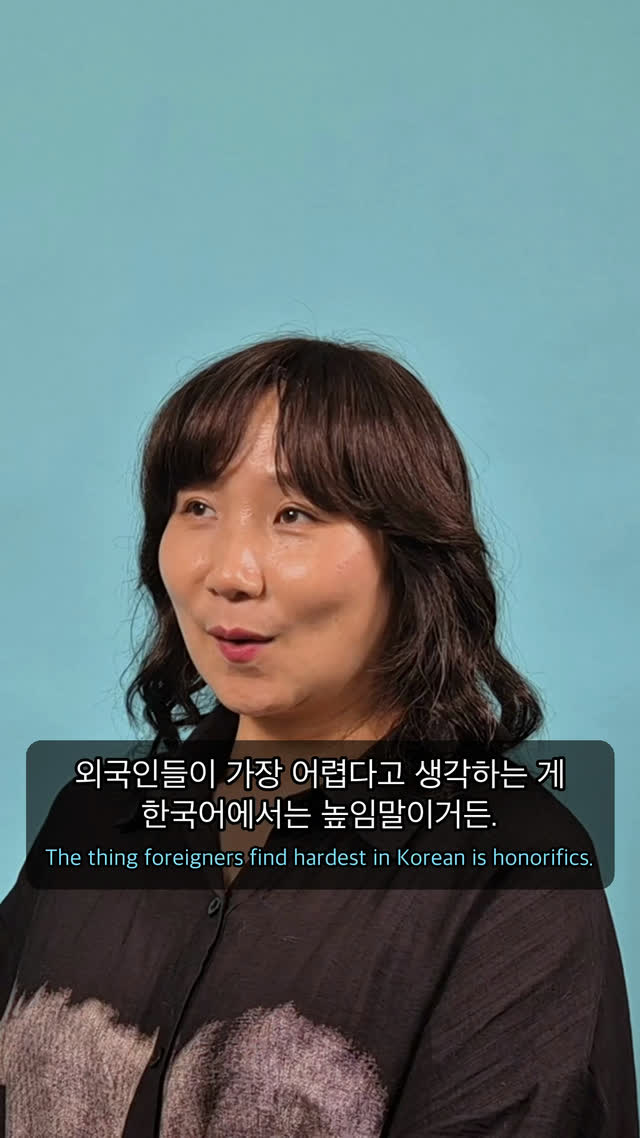
Honorifics are not politeness rules to memorize. They are a way of placing yourself next to another person.
높임말은 외워야 할 예절 규칙이 아닙니다. 상대 옆에 나를 어디쯤 두는지를 정하는 방식입니다.
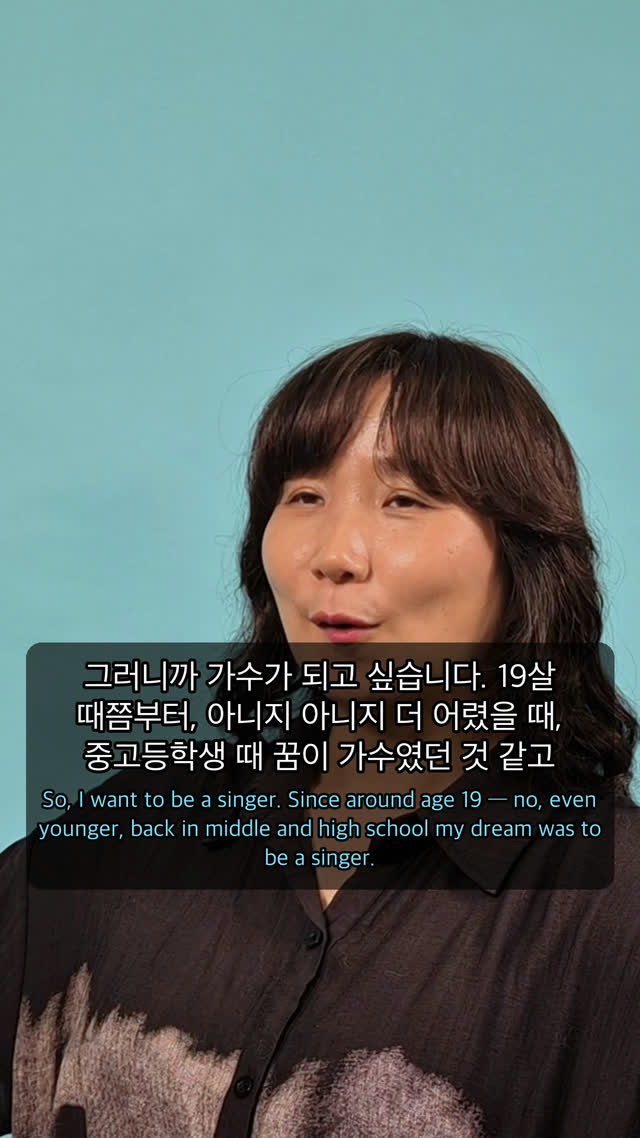
Around 19, maybe younger. Before Korean became the thing she taught for nineteen years.
열아홉 무렵, 어쩌면 그보다 더 어렸을 때. 한국어가 19년의 일이 되기 전 이야기입니다.
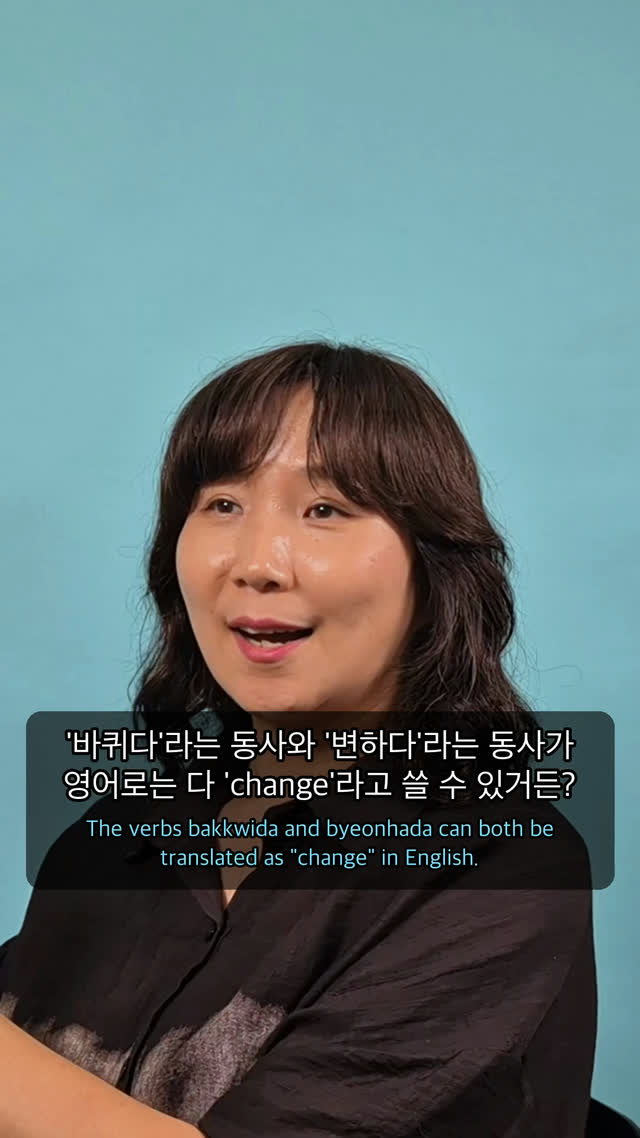
English has one word for it. Korean has two, and the gap can be taught.
영어로는 하나, 한국어로는 둘. 그 차이를 가르치는 방법이 있습니다.
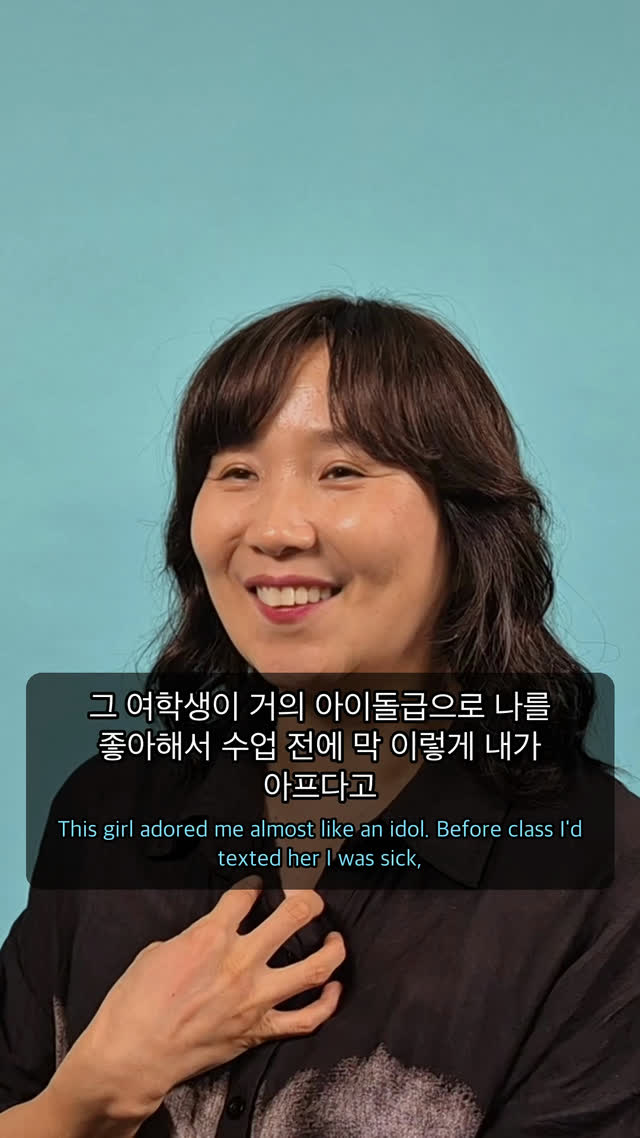
She mentioned she was unwell. A student left breakfast on her desk.
아프다는 말 한마디에, 학생은 죽을 쒀 강사실에 두고 갔습니다.
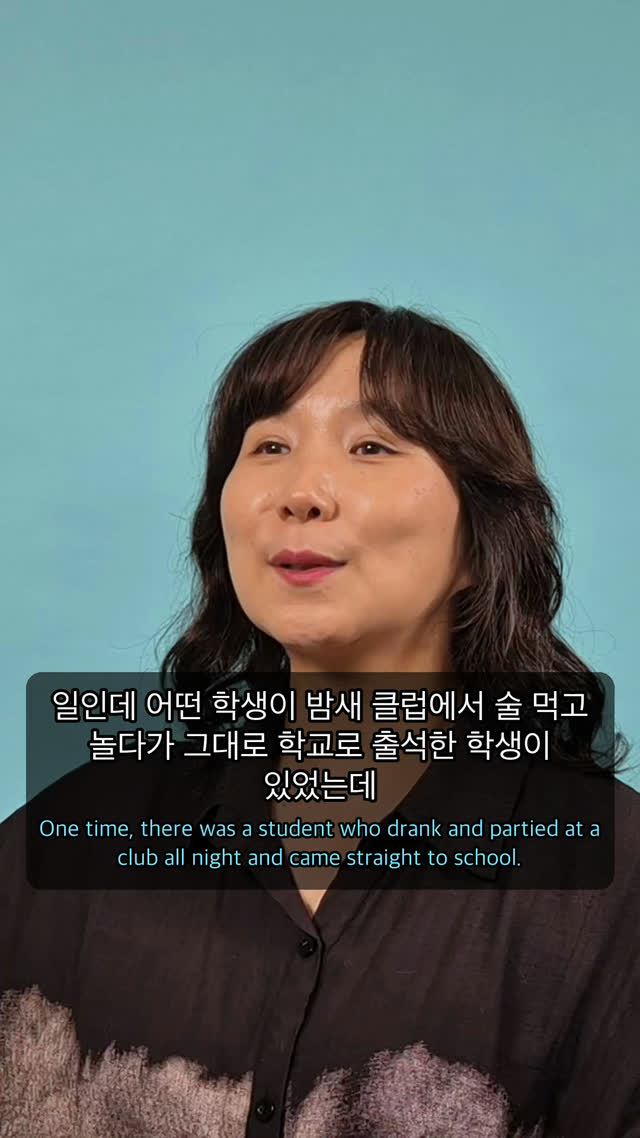
One student never went home first. Fifteen years on, it still comes up.
밤새 놀고 집에도 안 들르고 온 학생. 15년이 지나도 잊히지 않습니다.
More is on the way. Nine more clips are edited and waiting for the channel to open. When YouTube and Instagram go live, this page will link straight to them. 더 나옵니다. 아홉 편이 이미 편집을 마치고 채널 공개를 기다리고 있습니다. 유튜브와 인스타그램이 열리면 이 페이지에서 바로 이어집니다.